In conversation with Kamva Matuis: On the finality of death, grief and birth
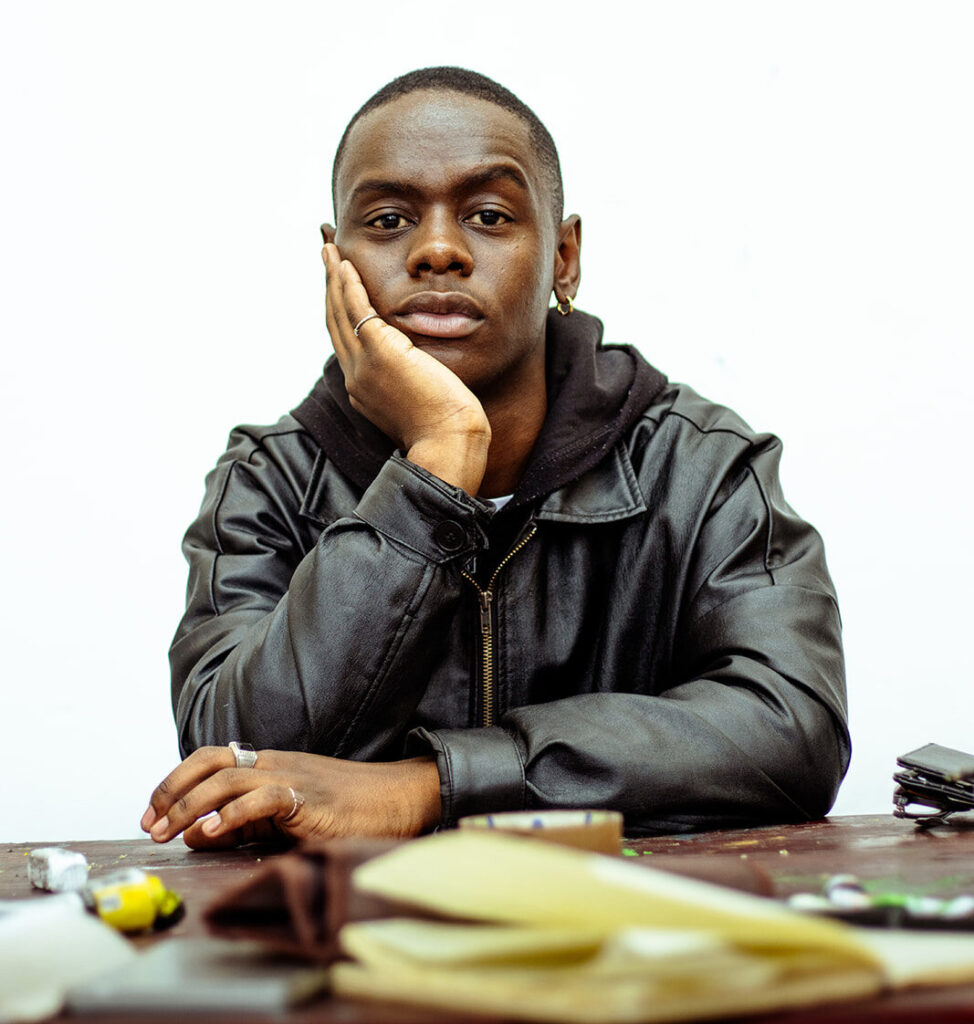
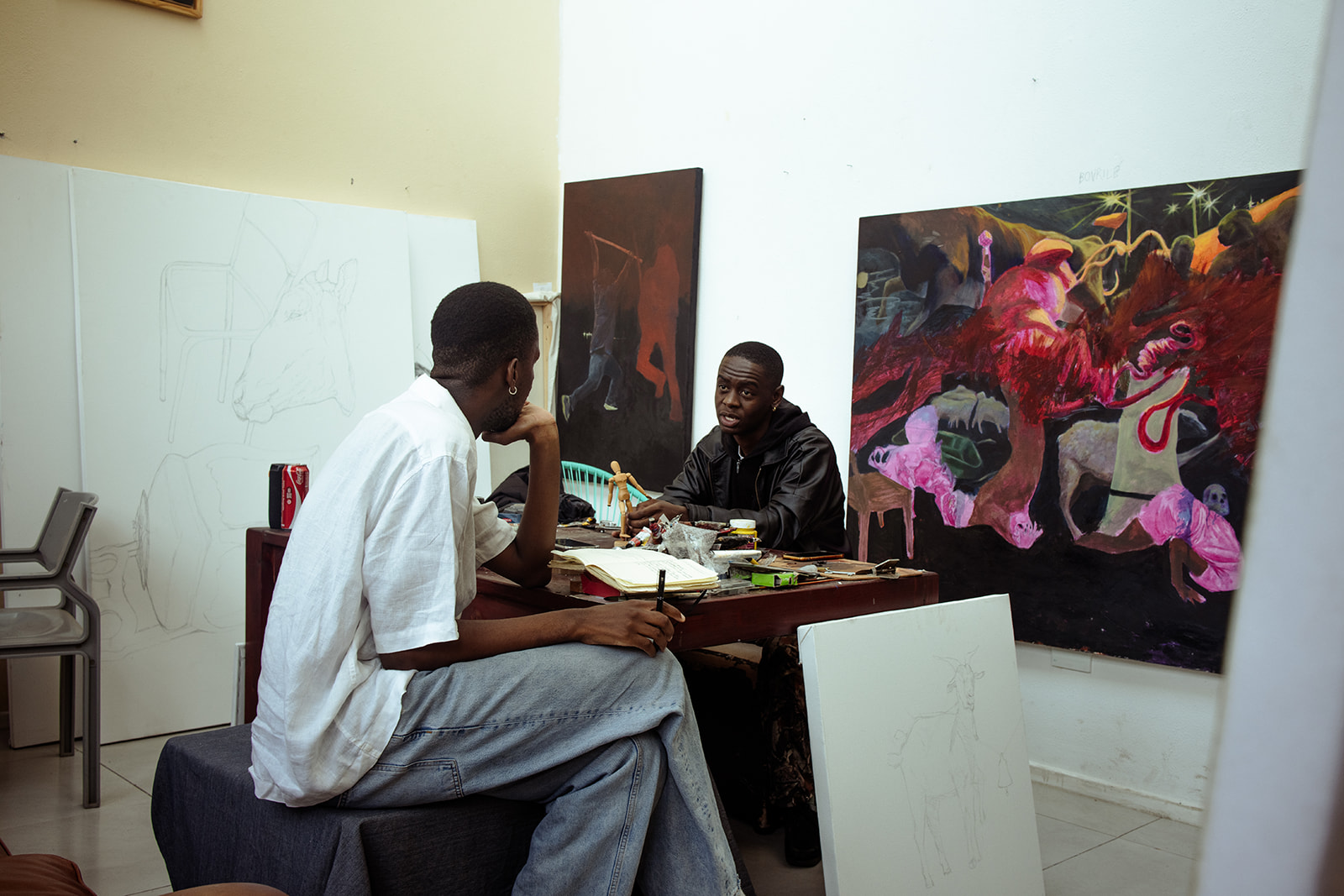
Kamva Matuis is a 22-year-old Johannesburg-based painter, completing his Bachelor of Fine Arts (Honours) at the University of the Witwatersrand and our first ARTIST OF THE MOMENT. I had the honour to meet him in his shared BLVCK BLOCK studio, where our conversation took place.
When questioned what his art represents, he answered, “I don’t know about representing, but I think it’s like a search for self, right? And it’s a search for place within the world, and my place within the world and an ever-changing engagement with things that have to do with where I come from, the context that I come from or that I am in constantly. Right now, my work deals with themes such as blackness, power, and intimacy – these fire words. A lot of it, at its core, is about power and existing in the world.”
Kamva is an artist between two worlds: the hyper-modern city of Johannesburg and the quiet, rural Eastern Cape town of his upbringing, Burgersdorp. This tension between these two worlds, paired with his experiences in both locations, is what I believe is at the heart of his work. His work is a meditation on the personal experiences of his rural Xhosa upbringing, juxtaposed with his realities of contemporary life in Johannesburg.
Blackness and (black) identity are topical themes within the contemporary South African art landscape. These themes can often be interpreted and felt differently based on the social context of a particular location. What might come out of a Cape Town-based artist would not be the same as a Johannesburg-based one when tackling themes such as blackness and (black) identity. Kamva comments,“I think in Cape Town there are a lot of artists that think about being Xhosa. But then I think that being Xhosa then evokes a certain sense of being black in Cape Town. And in other places, I do not know. Cause I feel like that sometimes when I am in the Eastern Cape, I’m not black, I’m Xhosa. But then, in other spaces within the Eastern Cape, in the same way, I feel black. I think in Johannesburg, as a black person, you will feel black but then you also feel a blackness that’s also invigorating somehow. I think this is one of the few cities where black pride can be a thing. Because there are black people with money. There are black people who are queer here. There are black people who don’t fit certain boxes.”
Our towns and cities still hold remnants of our nation’s past. For Kamva, Burgersdorp and many other towns in the Eastern Cape are shaped by their colonial and military past. He states,“If you go to town, you would assume that black people are not the majority, or you would assume that this is an Afrikaans town but then you turn around the mountain.” He continues to talk about the history of the Eastern Cape and how many of the towns were military posts with forts, hilltop cannons and guns to guard the railroads that traveled through the province, rail lines that (as he as been told) terminated in Johannesburg via Kimberly.
When he talks about these histories, he’s not talking about them only from a place of fascination but as a way of trying to understand the context he grew up in and how it affects him in the present day. “Hence, I say the work is about me being in the world and existing in the world. Because to have the sensibility of an Afrikaans town that was once a military [Anglo-] Boer War town and being black in a town like that and moving in certain ways there and coming back to Johannesburg, when you came from a place where unity says black. Then you come to a Joburg, where, okay, not everyone who is black is kinfolk. You will face classism, you will be in situations where you will need to code-switch. I don’t think I have addressed those feelings in the work as yet, concerning Joburg but I have addressed those feelings regarding the Eastern Cape and being Xhosa. Also, these realities I have gone through with modernisation and things of that nature. And that’s what I try to say in my work. In my work, there are Christian references and references to the Bible.”
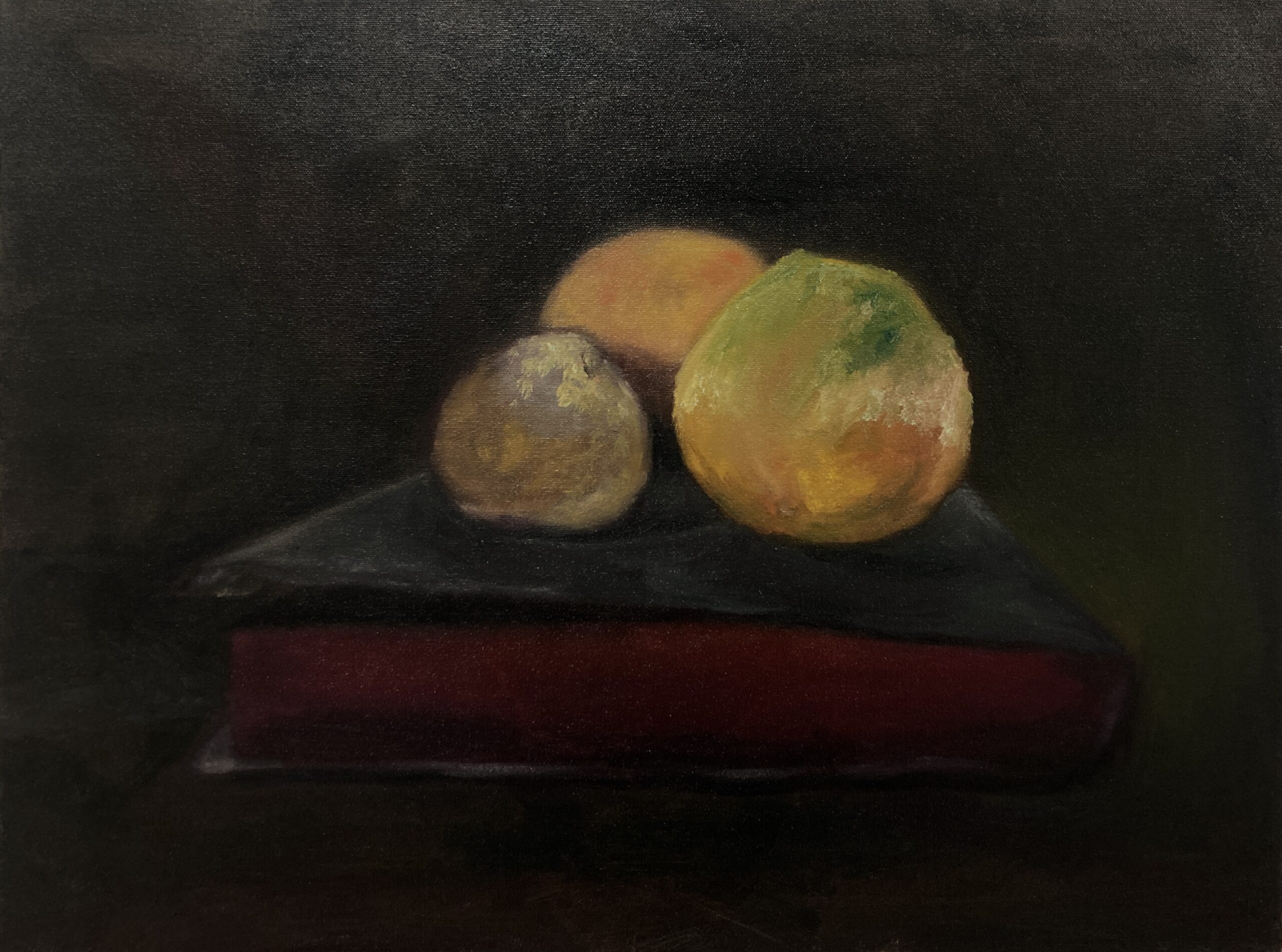
‘Zibolile zinnempethu ii’ by Kamva Matuis
A standout work of Kamva’s is his painting titled ‘The Complex of the Saint in Bachanalia’ (pictured below), which hung behind him as I sat across a table from him during our conversation, an impressive A0 canvas work. Kamva speaks about this work being created during a time when he was frustrated with the art world and the paradoxical relationship that sometimes occurs between an artist and the industry. He shares,’’…I think even when I was making this painting, I was feeling frustrated with painting. I was feeling frustrated with painting itself. There are parts that I draw on, there are parts where I stopped the process of painting and there are parts where I overpainted. So there’s an engagement with the idea of painting itself. There are moments where meaning is lost and moments where meaning is overly put or there’s too much shine. Even in the idea, I was also battling with ideas of death and finality.’’
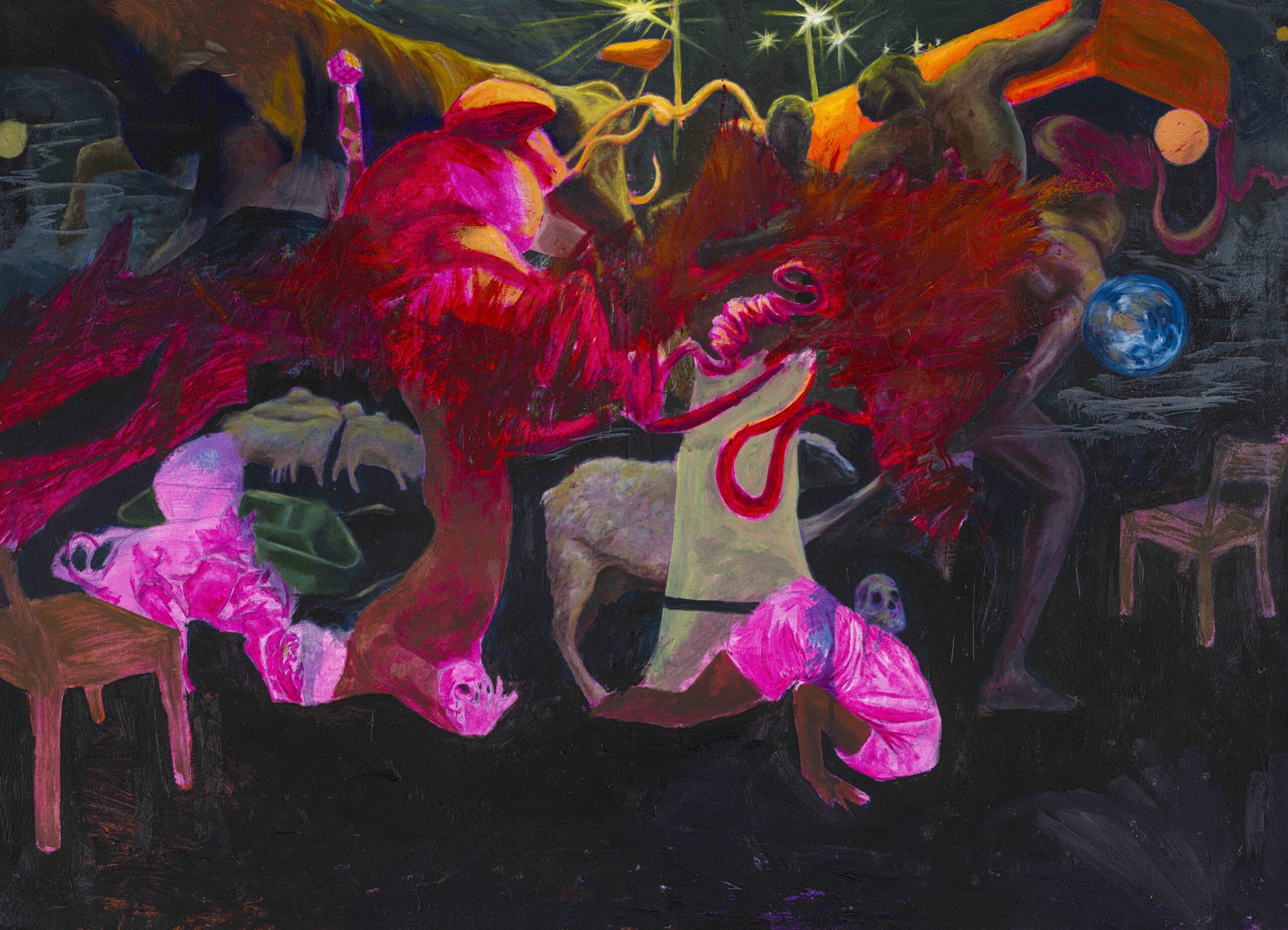
‘The Complex of the Saint in Bachanalia’ by Kamva Matuis, R3 500, available for purchase on The Dealr
‘Zibolile Zineempethu’ is another notable work of Kamva, in which a post-mortem body is depicted lying chest up with a rotting apple sitting atop. Its description reads as: “In this oil painting, a body sits torn up and sworn up with an autopsy scar, an apple rotting away resting on top of its abdomen. They are both dead, cold death, absolute finality.” Death, grief and finality are themes that are carried throughout his practice.
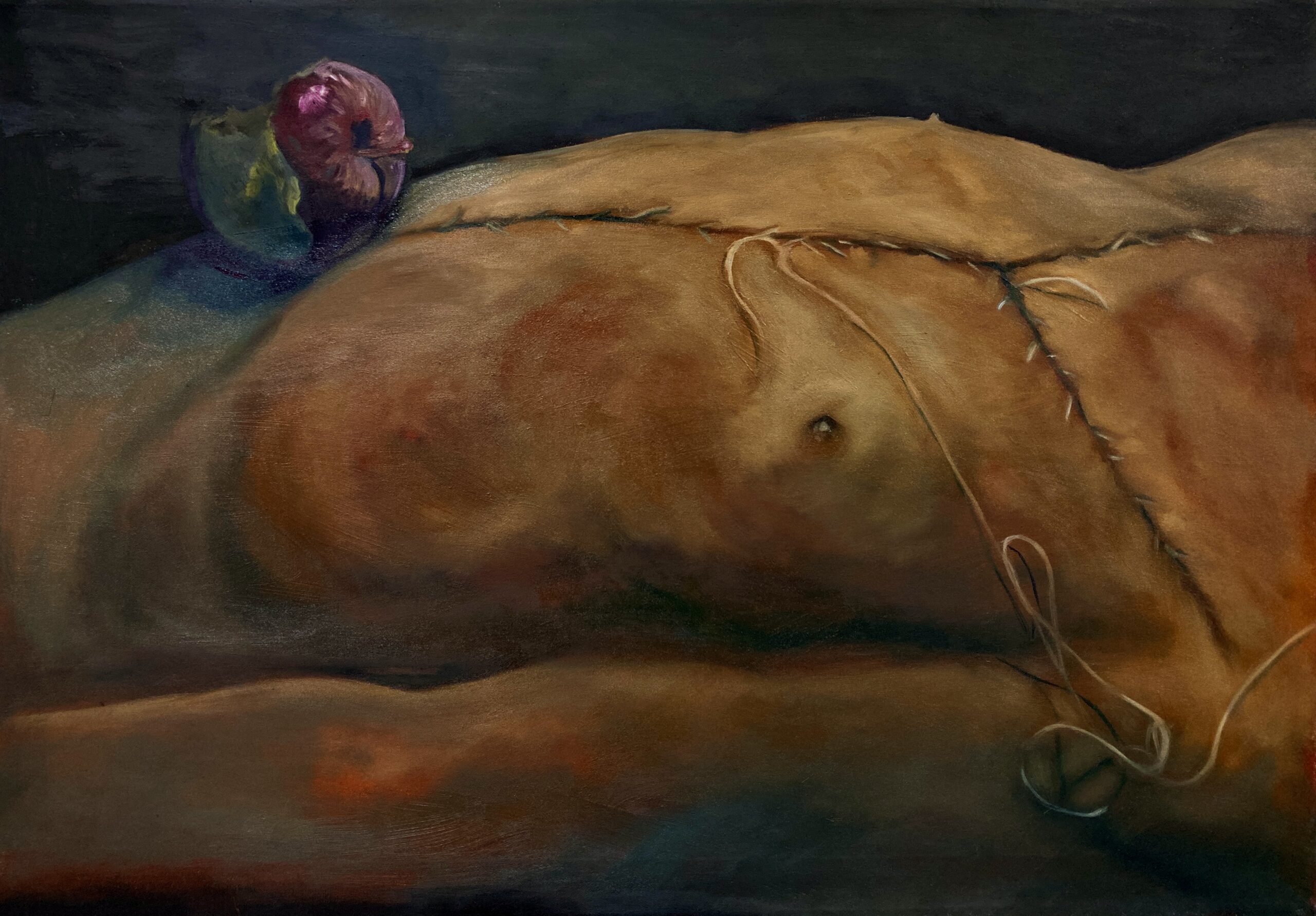
‘Zibolile Zineempethu’ by Kamva Matuis
An Instagram post from Kamva’s account that stood out to me is a post dedicated to his late cousin, Olwethu. Olwethu’s death left a noticeable gap in his family, especially for Kamva. He leaned on the support of his cousin, who was like an older-brother figure to him, as he was in the process of coming into his manhood. “… It left a sort of gap in my family. A sort of moment where grief became a theme, or grief became a thing, where we are all scattered and I see it in my mother. I see it in my brother and in his brothers and I see it in our parents. And I think the world or the people who met me have seen it within me, you know. Realising that they don’t have to turn seventy to die. But also at the same time, that was the trigger for many other thoughts that I have had around dying, dying while being alive, dying as a form of blackness.”
“…I think when things are closer to you, meaning shifts, like it becomes a whole other thing when you think about it so clearly. And also in the way that I paint animals dying, when you put things like ceremonies to them, the meaning becomes different. Oh, the spilling of blood becomes a whole different thing.”
Becoming a parent is a major moment in one’s life. Birth, tends to rapidly realign one’s priorities while providing one’s life with new meaning and perspective. For an artist like Kamva, becoming a father to a newborn daughter after spending so much time thinking about death and grief upended his world. With many of his works revolving around the subject of death and finality, one wonders how a birth so close to him will influence his work. He comments, “It’s definitely going to shift somehow. I remember when I had a supervisor at Wits. She asked me one time if I ever saw myself becoming a father? And I thought that was an odd thing to ask me, I am so young, I wanted it to happen ten years down the line. Then I asked, “Why do you think that?” She then was like, “You’ve meditated so much on the finality of life and have these ideas of death so close to you”. And it’s kind of crazy that 8 months later, I had a child after she had asked me that question.’’